PRIMUS PHYSIO
Cupping Therapy & Hijama

Cupping & Hijama
Newcastle-under-Lyme & Stoke-on-Trent

Dry cupping and hijama (wet cupping) offered by a qualified HCPC registered physiotherapist — serving Newcastle-under-Lyme, Stoke-on-Trent and across Staffordshire.

Dry CuppingHijamaWet CuppingSports RecoveryBack Pain
Dry Cupping & Hijama Explained

Both treatments use cups applied to the skin to create suction. The key difference is whether the skin is left intact or small superficial incisions are made beforehand.

Dry Cupping

Non-invasive · No incisions

  • Cups placed on skin to create a vacuum
  • Lifts the superficial tissue to improve blood flow
  • Releases muscle tension and fascial restriction
  • Effective for back pain, neck tension and sports recovery
  • Cups may be left static or moved (sliding cupping)
  • Suitable for most patients — no contraindications to bleeding
From £35

Hijama

Wet Cupping · Traditional Islamic Medicine

  • Small superficial incisions made before cupping
  • Cups draw a small amount of blood from the tissue
  • Rooted in the Sunnah — widely practised in Islamic medicine
  • Emerging research supports its use for certain MSK conditions
  • Performed with full sterile protocol and disposable equipment
  • Carried out by a qualified and experienced practitioner
From £35

Conditions Cupping Helps

Cupping is commonly used alongside physiotherapy for musculoskeletal conditions, and as a standalone treatment for general wellbeing and recovery.

Back Pain
Neck & Shoulder Tension
Sports Recovery
Muscle Tightness
Headaches
Hip Pain
Sciatica
Post-Exercise Soreness
General Wellbeing
Stress & Fatigue
Knee Pain
Plantar Fasciitis

What to Expect

Available in Newcastle-under-Lyme serving patients from across Stoke-on-Trent and Staffordshire. Sessions can be booked as a standalone treatment or combined with physiotherapy assessment and manual therapy.

1

Consultation

A brief discussion of your symptoms, health history and what you're hoping to achieve. Contraindications are checked — including skin conditions, medications affecting bleeding and pregnancy. For hijama, a more detailed health screen is conducted.

2

Preparation

The treatment area is cleaned thoroughly. For hijama, full sterile technique is applied and all equipment used is single-use disposable. Cup placement is discussed and explained before treatment begins.

3

Treatment

Cups are applied and left in place for several minutes. For sliding cupping, oil is applied and the cups are moved across the tissue. For hijama, small superficial incisions are made before the cups are reapplied. Most sessions last 30–45 minutes.

4

Aftercare advice

Guidance on hydration, activity and what to expect over the following 24–48 hours. Circular marks on the skin are normal and typically fade within 3–7 days. These are not bruises — they indicate the degree of tissue stagnation and improve with repeated sessions.

Cupping from a Physiotherapist

Luqman Mazhar is an HCPC and CSP registered physiotherapist and formerly Head Academy Physiotherapist at Port Vale FC. Cupping and hijama are offered alongside physiotherapy — serving patients from Newcastle-under-Lyme, Stoke-on-Trent, Hanley, Burslem and across Staffordshire. Treatment is informed by clinical assessment, not guesswork.

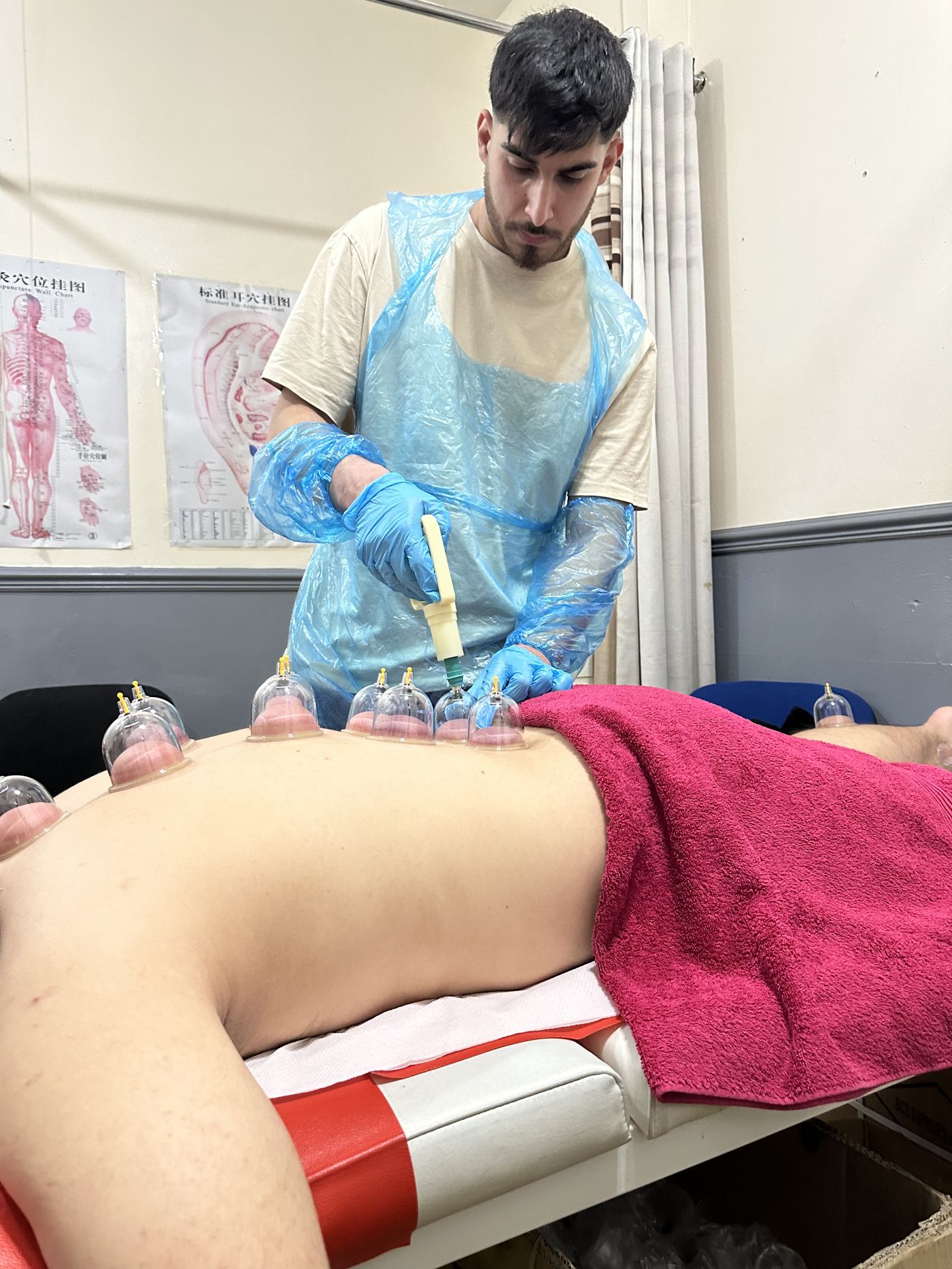
Luqman Mazhar performing cupping therapy at Primus Physio Newcastle-under-Lyme

Luqman performing cupping therapy at Primus Physio, Newcastle-under-Lyme

HCPC & CSP Registered

Regulated by the Health and Care Professions Council. Full professional indemnity insurance for all treatments.

Sterile Protocol

Full sterile technique for hijama. All equipment is single-use disposable. Clinical hygiene standards maintained throughout.

Combined with Physio

Cupping can be integrated with physiotherapy assessment and manual therapy for a comprehensive treatment approach.

Same-Week Appointments

Evenings and weekends available. No GP referral needed. Book online or call 07867 782786.

What Patients Say

★★★★★

"Very clean clinic with free parking. Luqman helped sort my shoulder issue and the cupping treatment was great."

— Balal Basharat
★★★★★

"Luqman provided an excellent physio service. Very professional and knowledgeable — highly recommend."

— Google Review

Frequently Asked Questions

What is the difference between dry cupping and hijama? +
Dry cupping uses suction cups placed on the skin to lift the tissue, improve blood flow and release muscle tension — no incisions are made. Hijama (wet cupping) involves small superficial incisions before cupping to draw a small amount of blood, which is considered therapeutically beneficial in traditional Islamic medicine. Both are offered at Primus Physio.
Is hijama the same as wet cupping? +
Yes — hijama is the Arabic term for wet cupping. It is a traditional practice rooted in Islamic medicine and is also supported by emerging research for certain musculoskeletal and inflammatory conditions.
Is cupping therapy painful? +
Dry cupping is generally not painful — most patients describe a pulling or pressure sensation. Hijama involves small superficial incisions which may cause brief mild discomfort. Both treatments are well tolerated by most patients and the discomfort is temporary.
Why do circular marks appear after cupping? +
The circular marks are caused by the suction drawing blood to the surface of the skin. They are not bruises and are not caused by injury — they indicate the degree of tissue stagnation in that area. The marks typically fade within 3–7 days and tend to reduce in intensity with repeated sessions.
How many sessions will I need? +
This depends on your condition and goals. Many patients notice benefit after a single session. For musculoskeletal conditions, cupping is typically most effective when combined with physiotherapy over a course of 3–6 sessions. For general wellbeing and recovery, regular monthly sessions are popular.
How much does cupping cost? +
Dry cupping starts from £35. Hijama starts from £35. Sessions can be standalone or combined with physiotherapy assessment and treatment. No GP referral needed.
Who is hijama not suitable for? +
Hijama is not suitable during pregnancy, for patients on blood-thinning medication (such as warfarin), those with bleeding disorders, active skin infections in the treatment area, or certain medical conditions. A full health screen is conducted before treatment to ensure suitability.
Do I need a GP referral? +
No — you can book directly at Primus Physio without a GP referral. Same-week appointments are available including evenings and weekends.
Ready to book?

Book Your Cupping Session

Cupping & Hijama from £35 · Same-week appointments in Newcastle-under-Lyme & Stoke-on-Trent

Book Now
Book Appointment